Can you utilize your web pen-testing skills to safeguard the event from any injection attack?
Write-up: Injectics

Can you utilize your web pen-testing skills to safeguard the event from any injection attack?
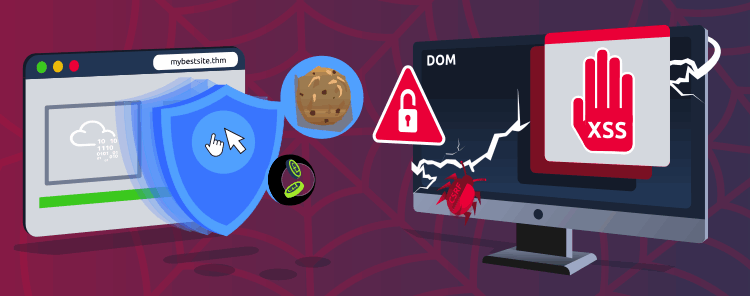
Never click on links received from unknown sources. Can you capture the flags and get admin access to the web app?
This challenge will test client-side exploitation skills, from inspecting JavaScript to manipulating cookies to launching CSRF/XSS attacks.
Shhh. Be very very quiet, no shouting inside the biblioteca.

Use your exploitation skills to bypass authentication mechanisms on a website and get RCE.
The librarian rushed some final changes to the web application before heading off on holiday. In the process, they accidentally left sensitive information behind! Your challenge is to find and exploit the vulnerabilities in the application to extract these secrets.
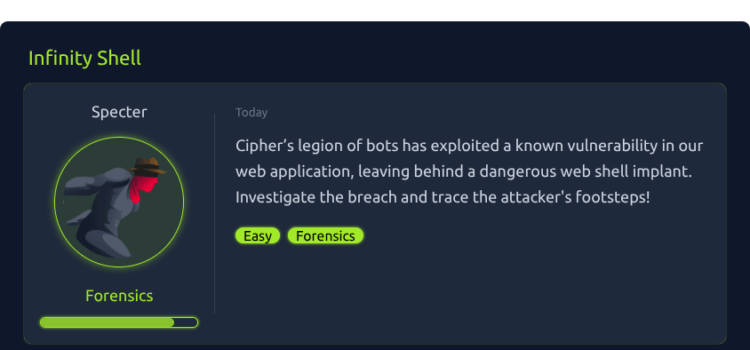
Cipher’s legion of bots has exploited a known vulnerability in our web application, leaving behind a dangerous web shell implant. Investigate the breach and trace the attacker’s footsteps!
This article explains how to set up a codespace to allow for signing git tags.
Multi-stage builds are a great way to keep the size of the resulting image down. They are extremely useful if you want to use scratch-based images for your application. However, unless you are using Buildx or BuildKit, there is a limitation regarding copying extended file attributes across stages. In this post, we discuss several workarounds to this issue.
Login Failure Daemon (lfd) is a process that monitors the authentication log and matches all its lines against the set of regular expressions to detect login attempts that continually fail within a short period of time. It is often used to detect login failures of SSH connections. However, the regular expressions lfd uses to detect brute force attacks contain severe errors, and an attacker can exploit those bugs to cause a denial of service attack.

No matter how much you trust in the npmjs package registry in general and in packages you are using in particular, Bad Things™ always happen. They happen to the best of us. Even a small Node.js project may have thousands of dependencies, which makes it virtually impossible for a developer to monitor and audit them all.
An NPM package has two main ways to harm you: the first one is when you install it, and the second one is when you actually use it. The first way is possible because of the so-called “lifecycle scripts” run by npm. And even though one of the earliest attacks exploiting lifecycle scripts dates back to 2017, developers still do not take measures to protect their data.
This post explains how to protect sensitive information (such as authentication tokens) when running CI builds.